


Do Raspberry Pi 3 Kits Still Work?
Yes, a Raspberry Pi 3 kit remains fully functional in 2025. These kits include everything needed for most hobbyist projects, with guaranteed hardware production through 2028-2030 and complete software support from the latest Raspberry Pi OS. Performance runs 2-3 times slower than newer models for demanding tasks, but the kit handles typical projects effectively.
What's Included in Raspberry Pi 3 Kits
The Raspberry Pi Foundation committed to extended production schedules for all Pi 3 variants. The Model B remains in production until January 2028, while the Model B+ extends to January 2030. This means purchasing a Raspberry Pi 3 kit today guarantees component availability and replacement parts for at least three more years.
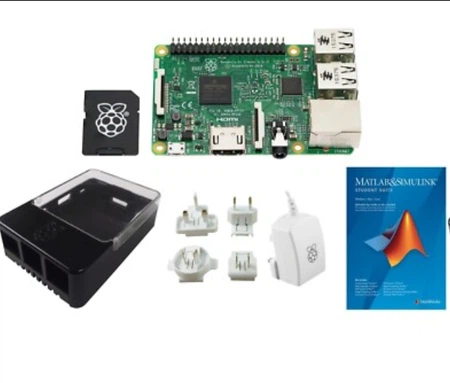
Official distributors like CanaKit, Vilros, and Adafruit still manufacture complete Raspberry Pi 3 kits with verified components. These kits typically include the board, power supply, case, microSD card, and basic accessories. The standardized 40-pin GPIO header ensures compatibility with thousands of existing HATs and expansion boards developed since 2016.
Power requirements remain straightforward with the Pi 3B needing 5V/2.5A via microUSB, while the B+ variant requires 5V/2.5A with improved power management. Both specifications work with commonly available USB power adapters, though the official Raspberry Pi power supply eliminates most troubleshooting issues related to undervoltage.
Software Compatibility in 2025
Raspberry Pi OS (formerly Raspbian) provides full support for Pi 3 hardware in its May 2025 release, based on Debian 13 "Trixie." The operating system receives regular security updates and maintains compatibility with all current software packages available through APT repositories.
Both 32-bit and 64-bit versions run on Pi 3 hardware. The 64-bit OS delivers noticeably faster performance on the Pi 3B+ compared to 32-bit, though users report the 32-bit version feels more responsive on the standard Pi 3B. The OS includes modern browsers (Chromium and Firefox), development tools (Thonny, Geany), and essential applications out of the box.
Legacy software compatibility extends to older operating systems when needed. Users successfully run distributions from 2020-2023 for specific projects requiring older package versions, though this approach sacrifices security updates. The flexibility to choose between cutting-edge and stable software makes Pi 3 viable for embedded applications with long deployment cycles.
Third-party operating systems like LibreELEC, OSMC, RetroPie, and Home Assistant maintain Pi 3 support. These specialized distributions optimize for specific use cases and generally perform better than running equivalent software on Raspberry Pi OS.

The Broadcom BCM2837 processor in the Pi 3 delivers quad-core 1.2 GHz performance with 1GB RAM. Benchmark comparisons show the Pi 4 executes tasks 2-3 times faster, while the Pi 5 extends that gap to 3-4 times faster for most workloads. This performance difference matters significantly for specific use cases, and understanding these limitations helps determine whether a Raspberry Pi 3 kit suits your project.
Light desktop computing works adequately on Pi 3 for text editing, simple web browsing, and basic programming. Opening multiple browser tabs or running memory-intensive applications causes noticeable lag. Users report Firefox handles 3-5 tabs comfortably before performance degrades, though lightweight browsers like Chromium work better.
Media playback represents a key limitation. The Pi 3 handles 1080p video from local files without issues but struggles with streaming services requiring modern DRM. YouTube playback at 1080p full-screen drops around 15% of frames, creating visible stuttering. The 720p quality level plays smoothly for most content.
Retro gaming emulation performs well up through PlayStation 1 era systems. The VideoCore IV GPU handles 16-bit console emulation perfectly, though Nintendo 64 games show inconsistent performance depending on the title. More demanding systems like GameCube remain beyond the Pi 3's capabilities.
Network-attached storage and file server applications work acceptably despite USB 2.0 bandwidth limitations. Transferring large files maxes out around 40-50 MB/s, which suffices for home media streaming and document sharing. The 10/100 Ethernet port on the standard Pi 3B creates a bottleneck, while the B+ variant's Gigabit Ethernet improves throughput though still limited by USB 2.0.
Best Projects for Raspberry Pi 3 Kits
Home automation controllers excel on Pi 3 hardware. Home Assistant, OpenHAB, and similar platforms manage smart home devices effectively since these applications emphasize reliability over raw speed. The board runs 24/7 with low power consumption while handling dozens of connected devices.
DNS-based ad blocking through Pi-hole runs perfectly on Pi 3. The network filtering doesn't require significant processing power, and the board handles typical home network traffic without performance issues. Thousands of users continue running Pi-hole on Pi 3 hardware daily.
Learning electronics and programming benefits from Pi 3's mature ecosystem. A Raspberry Pi 3 kit provides everything beginners need to start experimenting immediately. The extensive documentation, solved forum posts, and compatible component library makes it ideal for first-time users. Project tutorials from 2016-2025 work without modification, unlike newer models requiring updated instructions.
Lightweight web servers host personal blogs, static sites, and small web applications. Apache, Nginx, and Lighttpd run efficiently enough for development work and low-traffic production sites. PHP and MySQL installations handle basic database-driven content management systems like WordPress.
Security cameras and time-lapse photography utilize the Pi Camera Module v2, which connects directly to the board's CSI port. The Pi 3 processes 1080p video streams and motion detection algorithms without overwhelming the hardware. The infrared camera variant enables night vision applications.
Retro gaming stations using RetroPie create functional arcade cabinets, bartop machines, and handheld consoles. The performance handles classic gaming libraries comprehensively, and the large existing user base means troubleshooting resources exist for virtually any technical issue.
Desktop replacement computing exceeds Pi 3 capabilities for regular use. Modern web applications, productivity software, and multitasking demand more RAM and processing power. Users requiring daily desktop functionality should choose Pi 4 or Pi 5 instead.
AI and machine learning projects require significantly more computing resources. While quantized LLMs can technically run on Pi 3 using llama.cpp, response times prove impractically slow. Computer vision applications using TensorFlow or PyTorch perform poorly compared to newer models with better CPU and RAM specifications.
4K video playback and modern streaming services need Pi 4 or newer. The Pi 3's GPU and codec support don't handle current DRM requirements for services like Netflix, Disney+, or Amazon Prime Video. Even with workarounds, performance remains unsatisfactory.
Network-attached storage handling simultaneous multi-user access benefits from USB 3.0 speeds and Gigabit Ethernet capabilities found in later models. Large file transfers and RAID arrays overwhelm Pi 3's connectivity limitations.
Advanced robotics projects requiring real-time sensor processing and motor control face timing constraints with Pi 3's single-threaded performance. The latency impacts precise movement and object detection applications where newer models offer better responsiveness.
Raspberry Pi 3 Kit Pricing vs Newer Models
Complete Pi 3 starter kits retail between $70-$90, depending on included components. Comparable Pi 4 (4GB) kits cost $100-$120, while Pi 5 (4GB) kits range from $120-$150. The $30-$60 price difference represents 40-75% of the Pi 3 kit cost.
For projects within Pi 3's capability range, choosing a Raspberry Pi 3 kit proves more cost-effective. A home automation setup, Pi-hole server, or retro gaming system gains nothing from extra performance, making the savings substantial. The lower power consumption also reduces long-term electricity costs for always-on projects.
Used Pi 3 boards and kits appear frequently on second-hand markets at $30-$50, offering even greater value for appropriate applications. The mature platform means identifying working hardware is straightforward, and the robust design makes hardware failure uncommon.
However, purchasing Pi 3 for projects that will eventually outgrow its capabilities wastes the initial investment. Users planning to expand functionality or run more demanding applications later should invest in newer hardware immediately rather than upgrading within a few months.
Can Raspberry Pi 3 run the latest Python and programming languages?
Yes, Pi 3 runs Python 3.12 and current versions of popular programming languages through standard package managers. Development work in Python, JavaScript, C/C++, and Java performs adequately for learning and small-scale projects. The main limitation affects compile times and IDE responsiveness with large codebases.
Will accessories and HATs from Pi 3 work on newer models?
Most accessories maintain backward and forward compatibility through the standardized 40-pin GPIO header. HATs designed for Pi 3 work on Pi 4 and Pi 5 in most cases, though some exceptions exist around power management and specific sensor timing. The camera and display connectors changed between Pi 3 and Pi 5, requiring adapters or new modules.
How long will software updates continue for Pi 3?
Raspberry Pi OS provides security updates for all supported hardware as long as it remains in production. Given the Pi 3's production timeline extending to 2028-2030, expect software support through at least 2030 and likely several years beyond. The Debian base ensures long-term package availability even after official support ends.
Is power consumption significantly lower on Pi 3 compared to newer models?
Pi 3B draws approximately 1.34A (6.7W) under load, while Pi 4 requires up to 3A (15W) and Pi 5 needs 5A (25W) at peak performance. For always-on projects running 24/7, this translates to 15-20 kWh versus 45-60 kWh annually, potentially saving $3-5 in electricity costs per year. The difference matters more in solar-powered or battery-operated applications.
Raspberry Pi 3 kits remain fully functional in 2025 for specific applications. The hardware executes light computing tasks, network services, media playback, home automation, and retro gaming effectively. Software support continues strong with regular updates and extensive community resources.
Choose a Raspberry Pi 3 kit when working within its performance envelope and price matters, or when its power efficiency benefits portable or solar-powered projects. Select newer models for desktop replacement, demanding applications, 4K media, or projects likely to expand beyond current requirements.
The Pi 3's nine-year ecosystem of solved problems, compatible parts, and working tutorials makes it surprisingly beginner-friendly compared to cutting-edge hardware with evolving documentation. For learning electronics and programming fundamentals, a Raspberry Pi 3 kit offers this maturity advantage over the raw performance of newer boards.